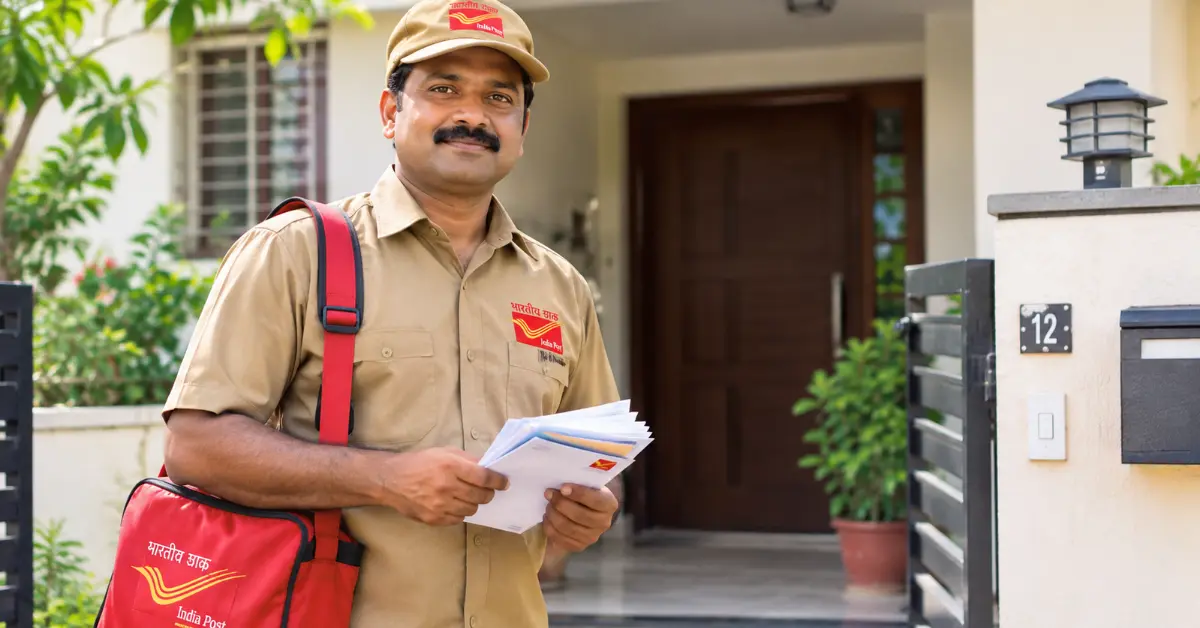
A postman is an important person in the postal system in India, he is responsible for delivering letters, parcels, and other postal items to the right people. Many people aspire to a job in India Post, and one of the most common questions is the salary of a postman. How much does he earn each month?
This article explains the postman salary structure, allowances, deductions and the difference between a regular postman and a Gramin Dak Sevak (GDS).
Who Is a Postman?
A postman works for India Post and is responsible for delivering mail, parcels and other postal services within an assigned area. The job involves regular field work and requires employees to travel through their delivery routes.
A postman is a regular departmental employee, unlike a GDS, whose service conditions are different.
Postman Salary in India
The salary of a postman depends on the applicable pay level, basic pay, dearness allowance, house rent allowance, transport allowance and other benefits.
Under the 7th Pay Commission pay structure, the postman post is associated with Pay Level 3, with a starting basic pay of ₹21,700.
The actual monthly salary is higher than the basic pay because eligible employees also receive various allowances. The amount received in hand depends on the employee’s posting location and deductions such as pension contributions and insurance.
For this reason, there is no single fixed in-hand salary for every postman.
Postman Salary Structure
The main components of a postman’s salary include the following:
1. Basic Pay
Basic pay is the fixed component of the salary and forms the basis for calculating several other benefits and allowances.
For a newly appointed postman under the 7th Pay Commission structure, the basic pay starts at ₹21,700.
2. Dearness Allowance (DA)
Dearness Allowance is paid to government employees to provide relief against inflation. The DA rate is revised periodically by the government.
Since the rate can change over time, the amount of DA included in a postman’s salary will also change.
3. House Rent Allowance (HRA)
Eligible employees may receive House Rent Allowance depending on their place of posting and the applicable city classification.
The HRA amount is therefore different for employees working in different locations.
4. Transport Allowance
Transport Allowance is provided to eligible employees to meet part of their commuting and transportation expenses. The amount depends on the applicable government rules and the employee’s place of posting.
5. Other Allowances
Depending on the nature of the job and applicable rules, a postman may also receive other allowances or reimbursements.
The exact benefits can vary according to the employee’s circumstances and government orders in force at the time.
Example of Monthly Salary
A postman’s gross salary consists of basic pay plus applicable allowances. From this amount, deductions are made for items such as the employee’s pension contribution, insurance and other applicable deductions.
Therefore, the final amount credited to the employee’s bank account can be lower than the gross salary.
The figures often published online should be treated as examples rather than a fixed salary for every postman, because allowance rates and deductions can change.
8th Pay Commission and Postman Salary
The 8th Central Pay Commission has generated considerable interest among central government employees, including postal employees.
Various employee organisations have submitted demands relating to pay, allowances, fitment factor and other service conditions. Some proposals have suggested substantial increases in the basic pay of postal employees.
However, proposals made by employee organisations should not be treated as the final salary structure.
The final salary under the 8th Pay Commission will depend on the recommendations of the commission and the government’s decision on those recommendations. Until the new pay structure is officially notified, figures such as a basic salary of ₹1.12 lakh should be considered proposed or speculative rather than confirmed.
Postman vs GDS Salary
Postmen and Gramin Dak Sevaks (GDS) are not the same category of employee.
GDS employees work under a separate service structure and are paid under the Time Related Continuity Allowance (TRCA) system. Their working hours and pay structure are different from those of regular departmental employees.
Some common GDS positions include:
| Post | Pay Structure |
|---|---|
| Branch Postmaster (BPM) | TRCA-based remuneration |
| Assistant Branch Postmaster (ABPM) | TRCA-based remuneration |
| Dak Sevak | TRCA-based remuneration |
The exact remuneration depends on the working hours, level and applicable government rules.
Factors That Affect a Postman’s Salary
Several factors can affect the amount a postman receives each month:
- Basic Pay: Salary increases through the applicable pay matrix and annual increments.
- DA: The dearness allowance rate is revised periodically.
- Posting Location: HRA and some other benefits can vary according to the place of posting.
- Allowances: Eligible employees may receive different allowances under government rules.
- Deductions: Pension contributions, insurance and other deductions reduce the final in-hand salary.
- Pay Commission: Changes to the central government pay structure can affect basic pay and allowances.
Final Takeaway
The salary of a postman in India is calculated based on the basic salary, various allowances and then applicable deductions. As per the current information, under the 7th Pay Commission structure, the starting salary of a postman is ₹21,700, while the actual monthly amount may vary depending on allowances, location and deductions. The 8th Pay Commission may bring changes in the salary structure, but the final figures can be confirmed only after the government’s decision and notification.